You are a spiritual being having a human experience. Maybe you’ve heard that before. If it’s true that perfect spiritual beings decided to experience imperfection, why would angels want to become beasts?
Maybe love wanted something imperfect to embrace, or it wouldn’t know itself as love. Unless it had something unloving to exalt, it wouldn’t be unconditional. It wouldn’t be love. Love accepts everything without conditions. Unless love loved something that was unable to love it back, it wouldn’t be able to prove itself as love. It wouldn’t be able to celebrate itself. Unless it nurses the child which, at times, fails or refuses gratitude in return, it wouldn’t be love.
It’s easy to love the divine, to adore what is perfect. Love shows itself what it is when it welcomes the imperfect. Those who love only the divine, as a concept detached from the world, miss the point of human existence. They don’t love anything but an idea. Those who worship the divine in humans but hate the humanness of people do not love. For love is not selective. It accepts indiscriminately. When you’re tempted to despise something human – anything human – or worse, to indifference toward people, ask: What is it I have come here to love?
Love is infinite expansion. If love is all-encompassing, then it’s already the all and its reach extends into what we can’t possibly comprehend. So to say that love expands is a fiction. There is no corner of reality into which it is not already maximally present. Love is a presence. It is a state, the state, of being. It is changeless. Yet love, experienced in this realm of constant change, is also an action. And as an action, love expands. It pretends to move into what it is not. By its very act of embrace, love seems to transform what it seems not to be into what love is. To do this, it invented what it seemed to not be. It invented humanness. Not humaneness, but humanity. It created something that it was not. And then, through the process of loving that something which was very human, which was imperfect, something very unexpected from our point of view, happens: that humanity, that part of life which seems imperfect, is transmuted into the divine.
By loving something seemingly unlike itself, love transforms that unloving element into love. The medieval alchemists were obsessed with transmuting the other elements into gold. The lover does not rest until it transforms its beloved into itself. We don’t become love. It becomes us.
In reality, love is the infinite. It already owns all the real estate. So the idea that something unloving surrounds love is a fiction. The thought that love is light shining in the darkness is an illusion, since there is no darkness. But imagine reality where all is light. If you were that light and if you beheld nothing but that light within and without, you would lose perspective about what the nature of light is. You would become blind, because all would be light. The light, under that circumstance, might as well be darkness.
For this reason, you would want contrast every once in a while, to appreciate your own brilliance. You might even invent a world of shadows and relief where the absence of light was possible. You would be a spiritual being creating a human experience.
And then something unusual would happen. You would forget what you really were. Blinded by the world you created, you’d forget where you came from. You wouldn’t remember what was real. You would confuse reality withy fantasy. You would, understandably, mistake the world you temporarily inhabited for the ultimate reality which you were. You would create a multiplicity of bodies and forces and energies, and a multiplicity of fears. For number implies division, and in division there is always fear.
Love is unity, but in this world of fragmentation, it seems to have opposites. This world would contain all the seeming opposites of love: the coldness of rejection; the despair of loneliness; the destruction of war; the ravages of disease. And all this suffering would end in death, a primal meaninglessness. In your forgetful state, you would invent a different remedy for each of these ills. Yet what all your balms would have in common is that they would not cure the sickness. If they worked at all, they would treat the symptom and not the cause, and would alleviate the symptom only temporarily. Only a single, uniform treatment could be applied to these many ills. This is what you have come here to remember: Love heals, and only love.
For your illusion to accomplish its purpose, it would need to be foolproof. In other words, your forgetting would need to be complete. And this is important, there would have to be no conclusive evidence of the true reality. If there was such evidence, then the purpose of the invented world, of the simulation if you will, would be defeated. Then you would know the truth, the truth that you are in a temporary state which has as its purpose the sharpening of your awareness, through contrast, so that you could know and celebrate what you really were. If you could see through the delusion, you would treat the world as a kind of waiting room. You would wait to die and the purpose of time would be defeated. You would misuse time and squander it on thrilling games, or you might commit murder just for the hell of it and waste your time that way. Or you would do what some saints are alleged to have done and just bide your time until you got off the planet.
To make the illusion foolproof not only prevents you from wasting time, but it serves the additional purpose of developing your awareness in the form of something called faith. Faith has developed religious connotations which some find distasteful, so to avoid this baggage, let’s call it by another name: belief. By belief, we do not necessarily mean a belief in God, since some of you will also bristle at that term. By belief, we mean a certain mental power, a capacity. You do not believe what you see. You think that this is true, but it is not. In fact, it is the opposite: you see what you believe. You have decided to be in this world to recall this fact. Why?
For similar reasons that you have chosen to create a fictional contrast to the unremitting light: because you have lived for so long – forever, in fact – in a dimension in which your sole thought has been the thought of love, that you know no contrast to it. Your default condition is the creative power of your thought, which is infinite expansion into itself. But as we have stated, the infinite cannot expand into corners where it is not or it wouldn’t be infinite. It’s already everywhere. And it can’t distill itself into a purer state since it is already absolute. To know that believing is seeing is the way out, the way back into recollection of who and what you truly are, which is the infinite light, which is love. You have evolved over billions of years to recall this single fact.
To love. It seems to you as if you have no other power. It seems to you as if you have no other choice. In the ultimate reality beyond the bounds of your humanity, you do not. You can only love. Yet love is freedom. Here, in your human state, love is choice, or it is not love at all. This is why you were made human. It is why chose, from a birthless, deathless state, to be born and to die. And so you chose to create love’s seeming opposite. You chose to do this to celebrate what love is. You decided to do this to remind yourself that one of love’s aspects is freedom. You chose birth to manifest love’s power. Power is creation. This, we call belief. What you believe, you create.
Belief
In your ultimate state, belief is unnecessary. You know. You know what you are. Yet here, blinded by the uncertainty of darkness, belief is necessary. It is, however, optional. Belief in love is a choice. Belief in love’s fictional opposite, which goes by as many names as does love itself, is also a choice. Keep in mind that to believe in love is to believe in freedom, which is to believe in choice, which is to believe in power, which is to believe in your capacity to create.
Yet through your choice not to believe in love, which we call nonbelief you grant yourselves a gift. By choosing nonbelief, you bestow upon yourselves the capacity to choose belief as well. Without this alternative, belief is merely a default condition. It is not choice, but automaticity. Without nonbelief, belief is not belief at all. For belief, and all the other terms for which belief stands in – freedom, choice, power, creation – requires that you exercise your capacity to select from two alternatives.
What are these alternatives? The first is love. Give it no other name. Give it all names. Apply to it no definition, for it chafes at the confines of words. You know it when you see it. You assay its presence when you feel it. You know it by experience, and not by terms.
In the same way, be grateful for the alternative to love: fear and all of its synonyms, such as hatred and apathy, selfishness and attack. For through these devices, love merely loves itself by responding to them with love. Through the vehicles of its seeming opposites, love would know and hold high what it is. There is no great risk in loving that which but loves you in return. Yet when light is shone into seeming darkness, when love reaches out to those who seem unable to love it in return, when love goes one step further into the darkness and extends its rays to that which seems to prey upon it, then it proves itself as love. So be grateful for your enemies. They give you the greatest opportunity to teach yourself what you truly are.
Be grateful when you hold open the door and don’t hear thank you. Celebrate when that same person takes your place in line at the checkout counter. For it is only then, with no expectation of return, that your gifts are truly given. If you are provisioned with the expected thanks, you are already repaid.
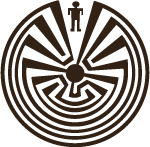
Love only demonstrates itself in its perceived absence. And its absence will be perceived as very real. Your illusion, your self-hypnosis, is so foolproof that you can no longer find your way out of its maze. From lifetime to lifetime you forget so thoroughly that you must ask: Who am I? Where did I come from? Where am I going? A tiny part of you remembers, and it calls to you in a whisper so faint you can barely hear it, for it is silence itself. In your human state you don’t listen to silence since you think it has nothing to say. Yet it says everything. It reminds. It will show you the way out. It will let you know that the choice is yours, that choice is yours. It will show you the way home.
In the winds of your choice, which seem to buffet you about from outside yourself, you bend back and forth. You love. You fear. You experience love’s absence. You feel lonely and sick. Prone to war as easily as love, you grieve. And in reaction to the alternatives to love which you yourselves have made, you feel the need to withdraw, to counter, to distract, to protect. Yet you always choose, even when the decision to fear is rationalized as the only choice, as justified by biology, as the overpowering drive of instinct, as determined by genetics, survival and evolution, or when it is supported by culture. You either love or you don’t.
Choice
Are you nothing more than reflex? Are you just a bundle of instinct and perception? Are you merely particles and quantum observations? Do you allow others, who have made choices you regard as reprehensible, to excuse their crimes by permitting them to blame them on instinct? You always choose. Let not your intellect deceive you into believing you don’t. For even in your deluded state, to justify your actions reduces you to something less than human, to less than what it means to be human. If to be human is to be an ambivalent mixture of love and fear, then to be human is also to choose.
Some say your birth is chosen. Others regard this as heresy. Even if your birth is not chosen by you, do you not still choose your response to your birth? To say this is not so is to place yourself as less than human. Some say your status is chosen, that high or low birth is a result of your actions in your past life. Others regard this as a lie. Even if you do not choose your own station in the world, do you not choose your reaction to this position?
To say that you do not choose denigrates you, slanders what it means to be human. It puts you on the level of a maggot, which, unmindful of its own drives, is condemned to consume meat and become a fly, and, laying its egg, repeats the process of birth and death. Is this what you are? Is it what you aspire to be? To say that this your condemning fate some would call a slur. They would say that you have no right to render such judgments against your fellow humans. You rail against those who judge you as less than human, yet when you deprive yourself of choice, it is you who condemn yourselves as less than human.
When does judgment not become a shame to render? Is judgment absolved when it is leveled against certain peoples at certain times? Is it permitted against specific races or genders? Against the rich? Against the poor? Against the conquered? Against the conqueror? You either choose it all, or all is chosen for you. You either judge everyone for every crime, or judge none for any transgression. If you do not choose, then judgment is meaningless. For to condemn those who cannot choose among real alternatives is a meaningless exercise in judgment. If you choose everything that happens to you, then none other than you can be judged. In either case, judgment, except against yourself, is unjustified. You alone, then, are left to forgive. You decide. Either love yourself, or condemn yourself.
If you created an alternative to love and then choose that alternative to remind yourself by its contrast what you really – which is love – is the reminder not preempted by your judgment? If so, then you’ve become so convinced of the reality of the dream that you are no longer able to wake from it. To create contrast to your true nature, to celebrate your true nature, is not cause for condemnation. It is cause for celebration. To make a fictional self in order that love may prove its nature by loving the human qualities in this self is no crime. For in a world of fictions, what crime can be committed, much less punished? You may sin in a dream, yet when you wake, where the consequence?
Love considers only this: that all is chosen, and yet that no choice but love can ultimately be made, so nothing can be judged. This is why love overlooks all wrongs. It only remains for you to forgive them as well. This is the perfection of love’s sole principle. It acts and takes responsibility for its act, yet judges it not. When you love, you must do this as well. This is perfect action. Love is this unconditioned act. It acts, yet judges not what it does.
Play in the playgrounds you have made. Dream the dreams you have written. And judge yourselves not. For as the children of love, which cannot according to its own law help but make more of itself. You are love. Being changeless, love has never lost its innocence. Being all there is, love has no enemy. Neither, then, do you.
© 2025 by Michael C. Just